How Naples Seasonality Affects When To Buy Or Sell
June 25, 2026
June 25, 2026
Wondering whether there is a perfect time to buy or sell in Naples? The short answer is yes and no. Naples has a clear seasonal rhythm, but the best timing for you depends on whether you value selection, leverage, exposure, or convenience most. If you understand how the local market moves from fall through summer, you can make a smarter decision with fewer surprises. Let’s dive in.
Naples is not a flat, year-round market. It tends to follow a winter-leaning seasonal pattern shaped by seasonal residents, visitors, and the broader Southwest Florida climate.
Collier County’s own traffic planning reflects that pattern. The county separates in-season and out-of-season traffic counts, and it excludes February and March from certain level-of-service analysis because those are peak tourist months. That matters because real estate activity often rises and falls with the same seasonal flow.
Weather also plays a role in how buyers and sellers experience the market. The National Weather Service says South Florida’s wet season runs from May 15 through October 15 and brings 60% to 70% of annual rainfall, with Naples averaging 36.08 inches during that period. Winter, by contrast, is typically cooler, less humid, and less rainy.
In Naples, market momentum usually starts building in the fall and carries through early spring. That does not mean the market stops in summer, but it does mean buyer traffic, open-house activity, and general town energy are often strongest during the cooler months.
NABOR’s October 2025 report showed that shift clearly. Open-house traffic increased as snowbird season approached, new listings rose 27.2% to 1,566, pending sales rose 48.5% to 790, and inventory measured 8.1 months, which NABOR described as a balanced market.
The busy pattern continued into winter. In January 2026, NABOR reported 1,906 new listings, 2,053 price decreases, and 9.2 months of inventory, giving buyers more choices across price points and property types.
February remained active as well. NABOR said buyers from the north and east were arriving in Naples, and overall inventory fell 15.1% year over year to 6,447 properties from 7,594.
By April 2026, high season had started to ease, but the market was still moving. Pending sales rose 38.2% year over year to 1,388, inventory fell 21% to 5,919, and less than 30% of homes for sale initiated a price decrease.
If you are buying in Naples, timing often comes down to one core trade-off: more selection versus more negotiating room. Each season can offer an advantage, but not always the same one.
Fall through winter can be especially useful if you want to compare more active listings and see Naples at its seasonal peak. You can observe traffic patterns, open-house activity, and how different areas feel when more part-time residents are in town.
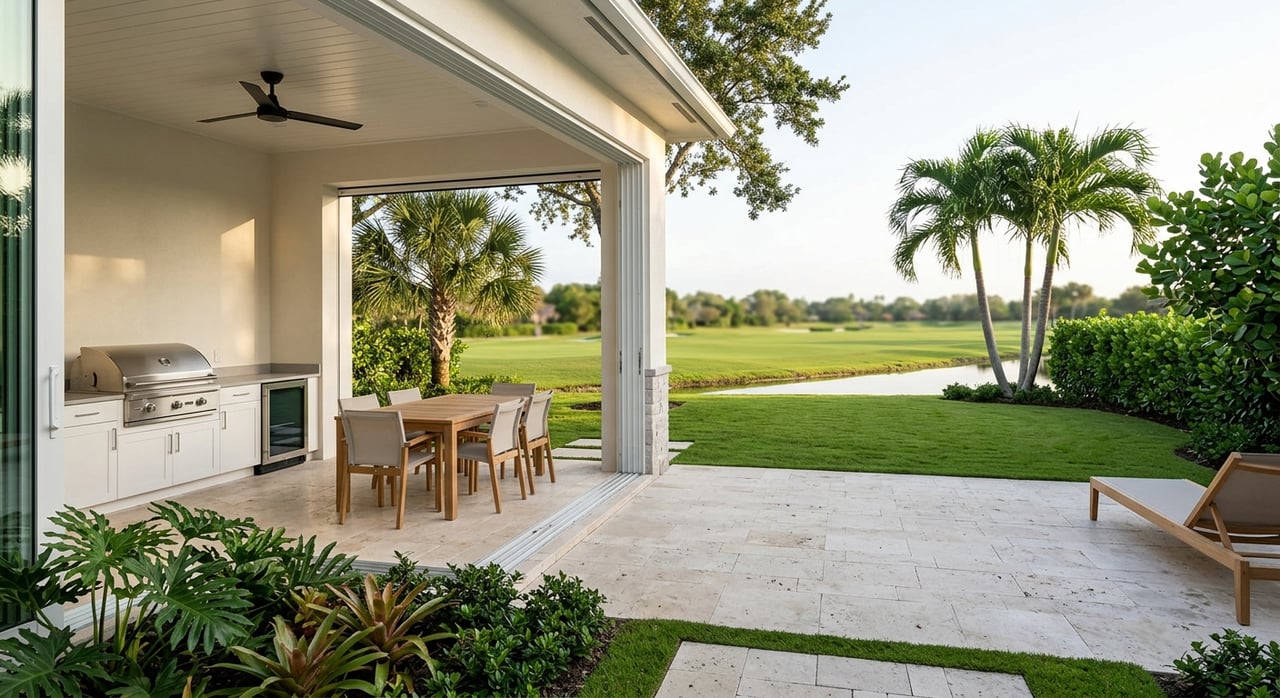
This can be important if you are choosing between a waterfront condo, a golf community property, or a lock-and-leave second home. In a lifestyle-driven market like Naples, seeing the area during its busier season can help you judge fit more clearly.
The trade-off is competition. More buyers are typically in town at the same time, so a well-positioned property may attract faster action and firmer terms.
If your main goal is negotiating leverage, January and slower summer periods are worth watching closely. January 2026 showed a high number of price reductions, with 2,053 decreases reported by NABOR.
Summer can also create opportunities because the market does not go dormant, even though it is historically slower. NABOR noted that the housing market held steady through summer, inventory decreased to pre-pandemic levels, and September still posted strong gains in pending and closed sales.
That said, slower months may bring fewer fresh listings and more weather-related inconvenience. Showings can be harder to coordinate during the wet season, especially when afternoon rain and thunderstorms become routine.
One of the biggest mistakes buyers make is assuming all of Naples moves the same way at the same time. It does not.
In April 2026, NABOR noted oversupply in some historically desirable neighborhoods while other areas, including the Vineyards, had less than a two-month supply. That means your ideal timing may depend just as much on property type and neighborhood as on the month on the calendar.
If you are focused on waterfront, golf, or luxury condo property, this point matters even more. A broader county trend can be helpful context, but your buying strategy should be shaped by the specific segment you are targeting.
If you are selling in Naples, seasonality can affect visibility, buyer traffic, and pricing strategy. Still, the strongest results usually come from matching your launch timing with current inventory and realistic pricing.
For many sellers, fall can be a strong time to enter the market because momentum often starts building before peak season is fully underway. October 2025 is a good example, with gains in open-house traffic, new listings, and pending sales as seasonal demand began to ramp up.
That can be especially useful if you want exposure before the market becomes more crowded with competing listings. A well-prepared home can benefit from buyers returning to Naples and starting their search in earnest.
No matter when you list, pricing discipline is critical. January’s 2,053 price decreases show how often sellers had to adjust to meet the market.
NABOR also noted in October that more realistic pricing was helping motivate buyers. In other words, the season may bring attention, but pricing is what helps turn that attention into serious offers.
This is particularly true for waterfront homes, golf properties, and higher-end condos. Buyers in these segments often compare details closely, including views, condition, amenities, access, and overall value positioning.
Summer is not a dead zone in Naples real estate. Homes can still sell well, especially when there is less competing inventory or when a property is positioned thoughtfully.
However, summer usually requires more attention to presentation and logistics. The wet season lasts from May 15 to October 15, and July and August are typically the hottest months in South Florida, so convenient showing plans and strong presentation become even more important.
For seasonal owners who are out of town, this often means planning ahead. Clean presentation, easy access, and a pricing strategy grounded in current neighborhood activity can make a meaningful difference.
Seasonality should guide your strategy, but it should not be the only factor. In Naples, property type often changes the timing equation.
A waterfront home may attract a different buyer rhythm than a golf community residence. A condo in Old Naples, Park Shore, Pelican Bay, or the Moorings may also behave differently from a single-family home farther inland, especially when inventory levels shift by area.
That is why countywide averages only tell part of the story. The better question is not just “When is the best month?” but “When is the best window for this specific property in this specific area?”
If you are trying to choose your timing, start with your main priority. That usually points you in the right direction faster than trying to guess the market perfectly.
Here is a practical way to think about it:
In Naples, seasonality is real, but it is not absolute. Fall through early spring usually brings more traffic and competition, while late spring and summer may create more breathing room for buyers or less crowding for sellers.
The best move is not to wait for a perfect month. It is to match your goals with current inventory, buyer behavior, and your specific neighborhood or property type.
If you are weighing the right time to buy or sell in Naples, Donna Schrim can help you look beyond the headlines and build a strategy around your property, your timing, and your goals.
Stay up to date on the latest real estate trends.


A thoughtful, results-driven approach tailored to your goals—combining market insight, strategic guidance, and a seamless experience from start to finish.